

If you lead payments, partnerships, expansion, or business development, the question is whether your merchants can offer a local Canadian funding experience without taking on new infrastructure, banking, or operational challenges.
Interac e‑Transfer® is already familiar to Canadians: 88% report having used it. Use this checklist to see if a Canadian payment partner can add pay by bank alongside cards, wallets, and other payment solutions without disrupting your existing payment stack or partnership model.
A strong payments partnership is not just about adding another payment method. It is about finding a partner that fits your product, your operating model, and your growth strategy in Canada.
What should I look for in a Canadian payment partner?
Look for a partner that understands Canadian payment preferences, supports local payment methods such as Interac e-Transfer and pay by bank, and can fit into your existing products, merchant relationships, and operational model.
Why does local Canadian payment expertise matter?
Canadian customers are familiar with local payment methods, and payment expectations can differ from other markets. A partner with Canadian payments expertise can help you offer relevant payment options without having to build the local infrastructure yourself.
Can a payment partner add pay by bank alongside cards?
Yes. A payment partner can add pay-by-bank options such as Interac e-Transfer alongside cards and other existing payment methods, giving customers more choice without requiring you to replace your current payment setup.
Do I need to replace my existing payment providers?
Not necessarily. The right payment partner should be able to complement your existing providers and payment products rather than requiring you to replace them.
What types of businesses can partner with Paramount Commerce?
Paramount Commerce works with payment aggregators, gateways, and referral partners that want to help their merchants access Canadian payment solutions. This includes partners serving high-growth industries such as iGaming, remittance, crypto, and financial services.
What payment integration options should a partner offer?
Depending on your business model, useful options can include API integrations, hosted payment flows, and referral models. The right approach depends on how much control your business wants over the payment experience and implementation.
How can I tell if a payment partner is a good operational fit?
Look at onboarding requirements, implementation timelines, reporting, payment-status information, support, risk processes, and how responsibilities are divided between your business and the payment partner.
What should I ask about risk and fraud?
Ask how the payment partner manages fraud, risk, merchant eligibility, transaction monitoring, and operational escalations. You should also understand which responsibilities remain with your business.
Can a payment partnership scale as my business grows?
A scalable partnership should be able to support increasing payment volumes, new merchant or customer needs, additional payment methods, and new Canadian use cases over time.
What makes a strong payment partnership?
A strong partnership should have clear responsibilities, transparent commercial terms, accessible support, and a shared understanding of how both businesses create value for merchants and customers.
How can I assess whether a payment partner is right for my Canadian expansion?
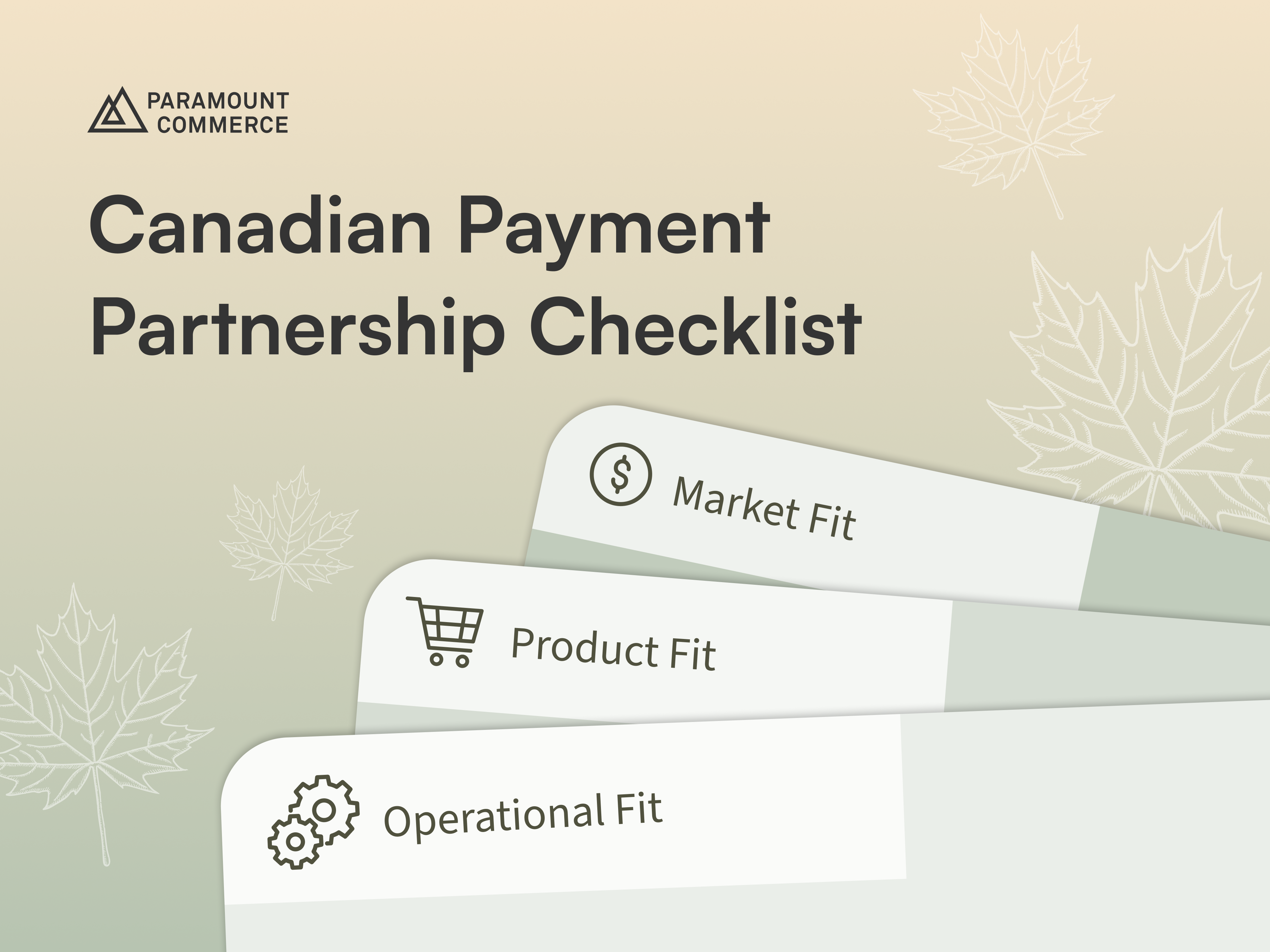
Use a structured assessment across market fit, product fit, operational fit, partnership fit, and Canadian payments expertise. This can help identify whether the payment partner fits your existing business model and Canadian growth plans.
Fintech trends and insights,
explained in 5 minutes or less

Fintech trends and insights,
explained in 5 minutes or less